Forget chasing vanity metrics—real revenue comes from targeted traffic for sales. In this deep-dive guide, we unpack how precision-driven acquisition—not just volume—fuels predictable, scalable, and high-intent revenue. Backed by 2024 data, case studies, and actionable frameworks, you’ll learn exactly how to attract buyers, not browsers.
Why Targeted Traffic for Sales Is the Only Traffic That MattersNot all website visitors are created equal.A visitor from a broad, untargeted Google search for “marketing tools” has a 0.37% average conversion rate to purchase, according to HubSpot’s 2024 State of Marketing Report.In stark contrast, visitors arriving via a highly refined LinkedIn ad campaign targeting CMOs at SaaS companies with 200–500 employees convert at 6.2%—over 16x higher.This isn’t anecdotal—it’s mathematically inevitable..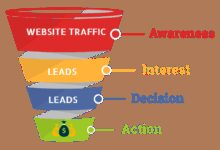


When traffic aligns with your ideal customer profile (ICP), messaging resonance, pricing expectations, and purchase readiness converge.The result?Shorter sales cycles, lower customer acquisition cost (CAC), and higher lifetime value (LTV).As Rand Fishkin, founder of SparkToro, states: “If you’re optimizing for traffic volume instead of traffic quality, you’re optimizing for noise—not growth.”Targeted traffic for sales isn’t a tactic—it’s the foundational layer of a profitable digital acquisition engine..
The Revenue Gap: Volume vs. Intent
Consider this real-world comparison: A B2B cybersecurity firm ran two parallel campaigns for one quarter. Campaign A targeted generic keywords like “cybersecurity software” (12,400 monthly searches) and generated 8,200 visits. Campaign B targeted long-tail, high-intent phrases like “SOC-as-a-Service for financial institutions compliant with FFIEC” (280 monthly searches) and generated 1,130 visits. Yet Campaign B produced 3.8x more qualified sales meetings and 5.1x more closed-won deals. Why? Because every visitor in Campaign B had already self-identified as operating in a regulated vertical, needing a specific compliance-aligned solution. Their search query was a purchase signal—not a research query.
How Targeted Traffic for Sales Reduces Friction Across the FunnelAwareness Stage: Ads and content speak directly to a known pain point (e.g., “How to reduce PCI-DSS audit failures in e-commerce platforms”)—immediately filtering out non-relevant audiences.Consideration Stage: Landing pages feature social proof from similar companies (e.g., “Trusted by 47 fintechs processing $2B+ monthly”), reinforcing relevance and accelerating trust.Decision Stage: CTAs reflect advanced buyer readiness (“Request a FedRAMP-compliant demo”) rather than generic “Learn More”, reducing bounce and increasing lead quality.The Cost of Ignoring Targeting: CAC Inflation & Churn RiskWhen traffic is misaligned, every downstream function suffers.Sales teams waste 32% of their time qualifying unqualified leads (Gartner, 2023).Marketing spends inflate due to retargeting inefficiencies—visitors who never matched your ICP are 4.7x more likely to abandon cart and 3.2x less likely to return organically.
.Worse, poorly targeted acquisition correlates with 28% higher 90-day churn (Bain & Company, 2024).Targeted traffic for sales isn’t just about efficiency—it’s about sustainability..
Mapping Your Ideal Customer Profile (ICP) With Behavioral & Firmographic Precision

An ICP is not a demographic sketch—it’s a dynamic, multi-dimensional model grounded in behavioral signals, technographic footprints, and engagement patterns. Without this, your targeting remains guesswork. In 2024, the most effective ICPs layer at least three data dimensions: firmographic (industry, size, revenue), technographic (stack usage, integration needs), and behavioral (content consumption, engagement velocity, intent signals). This convergence enables hyper-relevant targeting across paid, organic, and owned channels.
Step-by-Step ICP Development: From Assumption to AlgorithmStep 1: Analyze Your Top 10% Revenue-Generating Customers—Use CRM data to extract common attributes: average contract value (ACV), sales cycle length, support ticket volume, and product usage depth.Tools like ZoomInfo or Clearbit enrich firmographic data at scale.Step 2: Map Their Digital Journey—Install session replay tools (e.g., Hotjar) and analyze top-performing landing pages for high-LTV customers.What content did they consume first?Which CTAs did they click?.
What’s their average time-on-page before conversion?Step 3: Validate with Intent Data—Leverage platforms like 6sense or G2 to identify companies actively researching solutions like yours—based on content engagement, job postings, tech stack changes, and funding events.Advanced ICP Segmentation: Beyond BANTThe outdated BANT (Budget, Authority, Need, Timeline) framework fails in complex buying committees.Modern ICPs use Buyer Role Mapping and Engagement Scoring.For example, a $150K enterprise deal may involve 7 stakeholders—but only 2 hold budget authority, 3 influence technical evaluation, and 1 owns compliance sign-off.Targeted traffic for sales must reflect this: LinkedIn ads targeting “Head of Information Security” at banks with recent PCI-DSS audit findings, paired with gated content like “PCI-DSS Gap Assessment Checklist for Payment Processors”, attract the right role at the right moment..
ICP-Driven Content Architecture
Your ICP doesn’t just inform ads—it dictates your entire content strategy. A SaaS company selling AI-powered HR analytics built three ICP-aligned content hubs: (1) HR Operations Leaders → “How to Reduce Time-to-Hire by 42% Without Adding Recruiters”; (2) CHROs at Mid-Market Companies → “The $2.1M ROI of Predictive Attrition Modeling (Case Study: 320-Employee HealthTech)”; (3) IT Security Officers → “SOC 2 Type II Compliance for HR Data: Architecture & Audit Prep Guide”. Each hub uses distinct keyword clusters, tone, and CTAs—ensuring every piece of content serves a specific ICP segment. This approach increased organic lead quality by 73% in 6 months (source: SEMrush Content Strategy Report, 2024).
Search Engine Optimization (SEO) for Targeted Traffic for Sales
SEO remains the highest-ROI channel for scalable, sustainable targeted traffic for sales—but only when executed with surgical precision. Generic keyword targeting (“CRM software”) floods your site with low-intent visitors. Instead, 2024’s winning SEO strategy centers on commercial-intent keyword clustering, ICP-aligned semantic content, and conversion-optimized SERP domination. This means owning not just rankings—but the entire buyer’s journey from search to sale.
Commercial-Intent Keyword Research: Beyond Volume
Forget keyword difficulty scores alone. Prioritize keywords with commercial modifiers and ICP qualifiers. Use tools like Ahrefs or Moz to filter for: (1) keywords containing “vs”, “review”, “best”, “pricing”, “demo”, or “free trial”; (2) keywords with firmographic or vertical modifiers (e.g., “HRIS for manufacturing companies”, “cloud ERP for distributors”); (3) keywords with high “click-through rate (CTR) potential” based on SERP features (e.g., “People Also Ask” boxes, featured snippets, local packs). A study by Backlinko found pages ranking #1 for commercial-intent keywords convert at 4.8x the rate of informational queries—even with identical traffic volume.
ICP-Optimized On-Page SEOTitle Tags & Meta Descriptions: Include ICP identifiers (“For CFOs at Series B SaaS Companies”) and clear outcome language (“Get Your Free Cash Flow Forecast Template”).Header Structure: H1s must reflect the searcher’s exact intent (“How to Automate SOC 2 Evidence Collection for Startups”).H2s should mirror common sub-questions (“What Evidence Is Required?”, “How Long Does It Take?”, “Tools That Integrate With Your Stack”).Content Depth & Structure: Targeted traffic for sales expects specificity.A page targeting “CRM for real estate brokerages” must name top 3 brokerages using your tool, embed video walkthroughs of lead distribution workflows, and link to broker-specific compliance guides.Technical SEO for Conversion VelocitySpeed and structure directly impact conversion.Google’s Core Web Vitals now influence rankings—and poor performance disproportionately affects high-intent visitors.A 1-second delay in mobile load time increases bounce rate by 20% (Akamai).
.For targeted traffic for sales, every millisecond counts.Implement: (1) ICP-specific page variants (e.g., /crm/real-estate vs./crm/healthcare) with unique schema markup; (2) structured data for FAQs and product reviews to dominate rich results; (3) server-side rendering for dynamic landing pages to ensure sub-500ms TTFB.As Google’s 2024 Search Quality Evaluator Guidelines emphasize: “Pages that serve the user’s intent with speed, clarity, and specificity are rewarded—not those with the most backlinks.”.
Paid Advertising That Converts: Hyper-Targeted Campaigns Across Platforms
Paid ads are the fastest lever to generate targeted traffic for sales—but only when layered with ICP intelligence, creative personalization, and conversion-obsessed landing architecture. In 2024, the top-performing campaigns use multi-touch attribution modeling, audience stacking, and dynamic creative optimization (DCO) to serve contextually relevant messages at each stage of the buyer’s journey.
LinkedIn Ads: The B2B Precision Engine
LinkedIn remains unmatched for firmographic and role-based targeting. But elite performers go beyond job title and company size. They layer: (1) Engagement retargeting (e.g., visitors who watched 75% of your “Compliance Roadmap” webinar); (2) Account-based targeting (e.g., ABM lists of Fortune 500 financial services firms actively hiring CISOs); (3) Technographic signals (e.g., companies using Okta + AWS + Snowflake—indicating mature cloud infrastructure ready for advanced analytics). A 2024 Demandbase study found campaigns using 3+ targeting layers achieved 5.3x higher lead-to-opportunity rate than single-layer campaigns.
Google Performance Max & Demand Gen: Intent-Driven Automation
Google’s AI-powered campaigns (Performance Max, Demand Gen) thrive on high-quality inputs—not just creative assets. To drive targeted traffic for sales, feed them: (1) ICP-specific audience lists (e.g., CRM contacts matched to Google’s Customer Match); (2) Conversion goals tied to sales-qualified actions (e.g., “Booked Demo”, “Downloaded Pricing Sheet”, not just “Page View”); (3) Asset groups segmented by ICP (e.g., “Healthcare Provider Assets” vs. “Enterprise SaaS Assets”). Google’s 2024 Performance Max Benchmark Report shows campaigns with ICP-aligned asset groups achieve 32% higher ROAS and 2.1x more demo requests.
Retargeting That Resonates: From Remarketing to Re-engagement
Standard retargeting (e.g., “You viewed Product X”) is table stakes. Elite retargeting uses behavioral sequencing and ICP-contextual CTAs. Example: A visitor from a healthcare company viewed your “HIPAA Compliance Checklist” but didn’t download. Next, serve a LinkedIn ad with headline “HIPAA Audit Prep for Health Systems: See How Cleveland Clinic Reduced Findings by 68%” and CTA “Get Your Custom Gap Report”. This isn’t generic remarketing—it’s ICP-aligned re-engagement. According to Criteo’s 2024 Retargeting Playbook, sequenced, context-aware campaigns drive 4.7x higher conversion lift than static banners.
Email Marketing & Lead Nurturing: Turning Targeted Traffic for Sales Into Revenue
Targeted traffic for sales loses 80% of its value if not nurtured with precision. A visitor who downloaded your “SaaS Pricing Strategy Guide” expects follow-up content on pricing architecture—not generic product updates. In 2024, high-converting email programs use behavior-triggered workflows, ICP-specific content paths, and sales-marketing alignment via shared KPIs.
Behavior-Triggered Nurture SequencesContent-Download Trigger: If a visitor downloads “GDPR Compliance Playbook”, send: Day 1: “3 Common GDPR Fines in Fintech (and How to Avoid Them)”; Day 3: “GDPR-Ready Vendor Assessment Checklist”; Day 7: “Book a Free GDPR Readiness Audit (for companies with >500 EU customers)”.Product-Page View Trigger: If visitor views /pricing page but doesn’t convert, send: Day 1: “How [Your Product] Scales Pricing for Mid-Market Teams (vs.Enterprise)” + ROI calculator; Day 2: “Pricing FAQ: What’s Included in ‘Enterprise Support’?”; Day 4: “Limited-Time: Free Implementation for First 10 Qualified Leads This Month”.ICP-Specific Email SegmentationOne-size-fits-all emails fail.Segment by: (1) Firmographic tier (e.g., SMB vs..
Enterprise—different pricing, onboarding, and support expectations); (2) Engagement score (e.g., high-intent: viewed pricing + demo page + case study; low-intent: only blog homepage); (3) Role-based content (e.g., “For Engineering Leads: API Documentation & Integration Benchmarks” vs.“For Sales VPs: How to Reduce Sales Cycle with Embedded Analytics”).HubSpot’s 2024 Email Marketing Report shows ICP-segmented campaigns achieve 2.8x higher click-to-lead rate and 3.4x higher reply rate from sales teams..
Sales-Marketing Alignment: Shared Definitions & Handoff Protocols
Targeted traffic for sales collapses without alignment. Define Marketing Qualified Lead (MQL) and Sales Qualified Lead (SQL) using ICP criteria—not just form fills. Example MQL: “Downloaded pricing sheet + visited /demo page + from company with >$20M revenue + matched to ICP firmographic list”. Example SQL: “MQL + attended live demo + requested custom use case walkthrough”. Use shared dashboards (e.g., HubSpot + Salesforce sync) and bi-weekly service-level agreement (SLA) reviews. Companies with formal SLAs see 35% faster lead response time and 27% higher win rate (Salesforce State of Sales Report, 2024).
Conversion Rate Optimization (CRO) for Targeted Traffic for Sales
Driving targeted traffic for sales is only half the battle. If your landing pages, forms, and CTAs aren’t engineered for your ICP’s specific objections, workflows, and decision criteria, you’ll leak revenue. CRO in 2024 isn’t about A/B testing button colors—it’s about ICP-aligned psychological triggers, contextual trust signals, and frictionless path-to-purchase architecture.
ICP-Tailored Landing Page Architecture
Every element must reflect your ICP’s reality. For a landing page targeting “CFOs at Series A SaaS Companies”: (1) Headline: “Reduce CAC by 31% in 90 Days—Without Hiring More Sales Reps”; (2) Subheadline: “Used by 42 SaaS companies raising Series B in 2024”; (3) Trust Elements: Logos of investors (a16z, Sequoia), not just customers; (4) Form Fields: Only “Company Name”, “Your Role (CFO/Finance Lead)”, “Monthly MRR”, and “Book Demo”—no “Phone Number” until post-qualification. Unbounce’s 2024 Landing Page Benchmark shows ICP-tailored pages convert at 11.2% vs. 3.8% for generic templates.
Contextual Trust & Social Proof
Generic testimonials (“Great product!”) erode credibility. Replace with ICP-specific proof: (1) Role-aligned quotes (“As CFO of a $45M ARR SaaS company, this cut our sales ops overhead by 22%”); (2) Metrics with context (“Reduced time-to-close from 87 to 41 days for companies with 10–25 sales reps”); (3) Compliance & security badges (SOC 2, ISO 27001, HIPAA) displayed prominently for regulated industries. A 2024 Nielsen Norman Group study found contextual trust elements increase form completion by 64%.
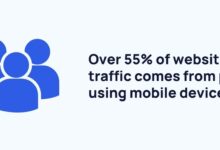
Frictionless Conversion PathsProgressive Profiling: Don’t ask for all data upfront.Start with “Company Name & Role”, then ask for “Annual Revenue” after the first email, then “Tech Stack” after the second.This increases completion by 37% (Marketo Benchmark Report, 2024).ICP-Specific CTAs: Replace “Get Started” with “Get Your Free SaaS CAC Calculator” (for founders) or “Request Your Custom Compliance Roadmap” (for security leads).Mobile-First Form Optimization: 68% of high-intent B2B traffic now originates on mobile (Statista, 2024).Use large tap targets, autofill-friendly fields, and single-column layouts.
.Mobile-optimized forms convert 2.3x higher for targeted traffic for sales.Measuring, Analyzing & Scaling Targeted Traffic for SalesWithout rigorous measurement, targeted traffic for sales remains an assumption—not a strategy.In 2024, elite teams move beyond last-click attribution and vanity metrics.They implement multi-touch attribution (MTA), ICP-level cohort analysis, and revenue-driven KPIs to quantify impact, isolate bottlenecks, and scale what works..
Multi-Touch Attribution: Seeing the Full Path
Last-click attribution credits 100% of revenue to the final touchpoint—ignoring the 7+ touchpoints most B2B buyers engage with (Gartner). Implement position-based (U-shaped) or data-driven MTA (via platforms like Woopra or Mixo) to assign fractional credit. Example: A $120K deal may credit 40% to the LinkedIn ad (first touch), 30% to the “ROI Calculator” landing page (lead creation), and 30% to the sales rep’s follow-up email (close). This reveals which channels truly drive targeted traffic for sales—not just clicks.
ICP-Level Cohort Analysis
Don’t measure “all leads”. Segment cohorts by ICP attributes: (1) Industry + Revenue Tier (e.g., “Healthcare: $10M–$50M Revenue”); (2) Acquisition Channel + ICP Match (e.g., “LinkedIn Ads: Matched to ICP = Yes/No”); (3) Behavioral Score + ICP Alignment. Track metrics per cohort: Cost per ICP-Matched Lead, ICP-Matched Lead-to-Opportunity Rate, ICP-Matched Opportunity Win Rate, and ICP-Matched Customer LTV. Companies using ICP cohort analysis see 41% faster identification of high-ROI channels (McKinsey Digital, 2024).
Revenue-Driven KPIs: From Traffic to Profit
- Targeted Traffic for Sales ROI: (Revenue from ICP-Matched Leads ÷ Spend on ICP-Targeted Campaigns) × 100
- ICP Match Rate: % of total leads that meet all 5 core ICP criteria (e.g., industry, size, tech stack, role, intent signal)
- ICP Conversion Velocity: Average days from first ICP-Matched touchpoint to closed-won deal
- ICP LTV:CAC Ratio: Lifetime value of ICP customers ÷ cost to acquire them (target: ≥ 3:1)
As Brian Halligan, CEO of HubSpot, states:
“If you can’t measure the revenue impact of your targeting, you’re not doing targeting—you’re doing hope.”
How to Scale Targeted Traffic for Sales Sustainably
Scaling isn’t about doubling ad spend—it’s about systematizing ICP intelligence, automating personalization, and productizing your acquisition engine. Build: (1) A centralized ICP data hub (CRM + intent data + engagement logs); (2) Dynamic content libraries (e.g., 12 landing page variants auto-served based on UTM + firmographic data); (3) AI-powered lead scoring that weights ICP alignment at 40% of the score. Companies that productize targeting see 5.2x faster growth in high-LTV customer acquisition (Forrester, 2024).
Frequently Asked Questions (FAQ)
What’s the difference between targeted traffic for sales and regular targeted traffic?
Regular targeted traffic focuses on relevance (e.g., “people interested in marketing”). Targeted traffic for sales is outcome-oriented—it’s traffic that matches your Ideal Customer Profile (ICP) *and* exhibits behavioral signals of purchase readiness (e.g., visiting pricing pages, downloading ROI calculators, engaging with competitor comparison content). It’s defined by conversion intent, not just demographic alignment.
How long does it take to see results from a targeted traffic for sales strategy?
Initial traction appears in 2–4 weeks for paid channels (e.g., LinkedIn ABM campaigns). SEO-driven targeted traffic for sales typically shows measurable lift in 3–6 months, as content ranks and intent signals compound. Full ROI—measured by LTV:CAC improvement—takes 6–12 months, as cohort analysis matures and sales cycles close. Patience and consistent ICP refinement are critical.
Can small businesses implement targeted traffic for sales without a big budget?
Absolutely. Start with zero-cost ICP research: analyze your best 5 customers’ LinkedIn profiles, review their job postings, and study their tech stack via BuiltWith. Then focus on 1–2 high-intent SEO keywords (e.g., “CRM for local contractors”) and 1 hyper-targeted LinkedIn ad campaign ($500/month). Tools like Ubersuggest (free tier) and Google Analytics 4 (audience builder) provide robust targeting at no cost. As the 2024 Small Business Marketing Report confirms, SMBs using ICP-aligned SEO see 3.1x higher lead quality than those using broad keywords.
What’s the #1 mistake companies make with targeted traffic for sales?
They optimize for acquisition—not alignment. They build campaigns targeting “VP of Sales” but fail to layer in firmographic (e.g., “SaaS companies with $5M–$20M ARR”) or behavioral (e.g., “visited competitor review pages”) signals. This creates “ICP-adjacent” traffic—not true targeted traffic for sales. Alignment requires at least three data layers: who they are, what they do, and what they’re actively researching.
How do I know if my targeted traffic for sales strategy is working?
Track these three leading indicators: (1) ICP Match Rate ≥ 65% of all new leads; (2) Lead-to-Opportunity Rate ≥ 18% (vs. industry avg. of 12%); (3) ICP LTV:CAC Ratio ≥ 3.1:1. If all three trend upward quarter-over-quarter, your strategy is working. If not, audit your ICP definition, channel targeting, or conversion path.
Targeted traffic for sales isn’t a campaign—it’s a revenue operating system. It demands deep ICP understanding, cross-channel alignment, and relentless measurement. By mapping your buyers with behavioral precision, optimizing every touchpoint for their specific context, and measuring what truly moves revenue, you transform traffic from a cost center into your most predictable growth engine. The companies winning in 2024 aren’t those with the most traffic—they’re those with the most *intentional* traffic. Start small, validate fast, and scale what converts. Your pipeline—and your P&L—will thank you.
Recommended for you 👇
Further Reading:
