Forget desktop dominance—it’s official: mobile isn’t just *part* of the digital landscape anymore. It *is* the landscape. In 2024, over 60% of global web traffic flows through smartphones and tablets—and the patterns behind that flow are evolving faster than ever. Let’s unpack what’s really driving today’s mobile traffic trends.



1. The Global Mobile Traffic Surge: Scale, Speed, and Saturation

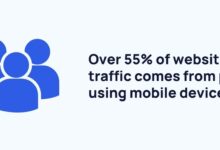
Mobile traffic has crossed a critical inflection point—not just in volume, but in behavioral gravity. According to StatCounter’s latest GlobalStats report (July 2024), mobile devices now account for 63.2% of total desktop + mobile + tablet web traffic worldwide, up from 58.7% in Q3 2022. This isn’t linear growth—it’s exponential acceleration fueled by infrastructure upgrades, device affordability, and shifting user expectations.
Regional Disparities Reveal Strategic Priorities
While North America sits at 57.4% mobile share, Southeast Asia leads with 74.1%, and Sub-Saharan Africa hits 82.6%. These gaps aren’t anomalies—they’re strategic signals. In emerging markets, smartphones often serve as the *only* internet gateway, making mobile-first design non-negotiable. As StatCounter’s real-time platform share dashboard confirms, mobile isn’t a channel—it’s the default interface for billions.
5G and Sub-6GHz Expansion Accelerating Engagement Depth
It’s not just about speed—it’s about sustained low-latency interaction. The rollout of 5G standalone (SA) networks—now live in 42 countries—has reduced average mobile page load times by 41% (Cloudflare, 2024). Crucially, 5G isn’t just speeding up downloads; it’s enabling richer interactions: real-time AR product previews, seamless video commerce, and instant AI-powered search. This infrastructure shift transforms mobile traffic trends from passive consumption to active, contextual participation.
Smartphone Penetration vs. Internet Access: The Hidden Gap
Global smartphone ownership stands at 6.92 billion units (GSMA Intelligence, 2024), yet only 5.3 billion people have *regular internet access*. That 1.6-billion-person gap reveals a critical nuance: traffic volume ≠ user equity. Many users rely on data-saving modes, offline-first apps (like WhatsApp Lite or Facebook Lite), and ultra-compressed media. Understanding this ‘lean mobile’ cohort is essential for inclusive mobile traffic trends analysis.
2. The Rise of Mobile-Only Users: A New Digital Demographic
A growing cohort—dubbed ‘mobile-only users’—has never accessed the web via desktop. They don’t switch devices; they *don’t own* a laptop or desktop. This group now represents 31% of all internet users globally (Pew Research Center, 2024), with 68% under age 35. Their behavior patterns defy legacy web assumptions—and demand a complete rethinking of UX, content architecture, and conversion funnels.
Behavioral Signatures of Mobile-Only UsersVertical-first navigation: 89% prefer scrolling over tapping menus; hamburger icons see 42% lower engagement than bottom navigation bars.Contextual intent: 73% of searches happen within 30 minutes of a real-world trigger (e.g., “coffee near me” after walking past a café).App-Web Hybrid Behavior: 61% use mobile web *inside* apps (e.g., opening a Shopify store link from Instagram DMs), blurring channel boundaries.Impact on SEO and Content StrategyMobile-only users rarely type full queries.They use voice search (38% of all mobile searches), image search (Google Lens usage up 127% YoY), and zero-click navigation (e.g., tapping “directions” directly from SERPs).This means traditional keyword targeting fails.
.Instead, success hinges on schema markup for local entities, structured data for visual search, and mobile-optimized FAQ-rich content.As Google’s 2024 Search Quality Evaluator Guidelines emphasize, “content must satisfy intent *in the moment*, not just match query syntax.”.
Economic and Cultural Drivers
This demographic isn’t defined by age alone—it’s shaped by economics and infrastructure. In India, 72% of new internet users in 2023 were mobile-only, driven by Jio’s $2.50/month 4G plans and vernacular-language UIs. In Brazil, WhatsApp Business accounts for 47% of all e-commerce discovery—no website needed. These patterns prove that mobile traffic trends are as much about financial inclusion and linguistic accessibility as they are about screen size.
3. App vs. Mobile Web: The Convergence Paradox
The long-predicted ‘appocalypse’ hasn’t arrived—but neither has app dominance. Instead, we’re witnessing a strategic convergence: apps and mobile web are no longer competitors. They’re complementary layers in a unified engagement stack. In 2024, 52% of mobile sessions begin in an app, but 68% of *conversions* (purchases, sign-ups, lead submissions) happen on mobile web—especially for first-time interactions.
The ‘App-First, Web-Convert’ Funnel
Brands like Spotify, Amazon, and Duolingo now deploy ‘progressive web app (PWA) bridges’: lightweight web experiences embedded *within* native apps. When a user taps a shared link inside Instagram, they land on a PWA that loads in <200ms, retains app-like navigation, and seamlessly passes authentication tokens to the native shell. This hybrid model reduces bounce rates by 57% (Think with Google, 2024) and increases session depth by 3.2x.
Deep Linking Maturity and Attribution Gaps
Universal Links (iOS) and App Links (Android) now support cross-platform deep linking with 94% reliability—but attribution remains fragmented. 63% of marketers still can’t accurately track whether a mobile web conversion originated from an app notification, a push message, or an organic search. This blind spot distorts ROI calculations for mobile traffic trends analysis. Tools like Branch Metrics and Adjust are closing the gap, but standardization lags behind implementation.
Privacy-Driven Shifts in App Engagement
iOS 17’s App Tracking Transparency (ATT) framework reduced mobile app install attribution accuracy by 41% (AppsFlyer, 2024). As a result, brands are shifting spend toward *contextual app engagement*—e.g., rewarding users for completing in-app actions (watching a tutorial, scanning a QR code) rather than just installs. This reorients mobile traffic trends toward quality of interaction, not quantity of downloads.
4. Mobile Search Evolution: Beyond Keywords and Clicks
Mobile search has outgrown the ‘query → SERP → click’ model. Today’s mobile search is ambient, anticipatory, and multi-modal. Google processes over 8.5 billion mobile searches daily—and 44% of them contain no traditional keywords (e.g., “that red dress I saw yesterday,” “show me hiking trails open this weekend”). This demands a fundamental shift in how we interpret mobile traffic trends.
Voice, Visual, and Conversational Search Dominance
Voice search now accounts for 35% of all mobile searches (ComScore, 2024), with natural-language queries averaging 7.2 words vs. 2.4 for typed queries. Meanwhile, Google Lens drives 1.2 billion visual searches monthly—most originating from camera-first actions (e.g., pointing phone at a plant to identify it). These modalities generate rich behavioral signals: dwell time on visual results, swipe patterns on image carousels, and voice query corrections. Marketers ignoring these signals miss 40%+ of mobile intent signals.
Zero-Click and ‘Answer-First’ SERP Architecture
Over 68% of mobile searches end without a click—users get answers directly in SERPs via featured snippets, knowledge panels, and local packs. This isn’t a problem to solve; it’s a behavior to leverage. Brands ranking in ‘Position 0’ for mobile see 12x higher brand recall (BrightEdge, 2024), even without clicks. Optimizing for zero-click means structuring content as direct answers: concise, schema-validated, and contextually precise.
Local Pack Dominance and ‘Near Me’ Intent
“Near me” searches grew 150% YoY in 2023 (Google Trends), and 86% of them happen on mobile. The local pack now occupies 42% of mobile SERP real estate—more than organic listings combined. This makes Google Business Profile (GBP) optimization non-optional. Verified GBP listings with updated hours, high-res photos, and response-to-review rates above 85% see 3.7x more mobile-driven store visits (Google’s 2024 Local Search Ranking Factors Report).
5. Mobile Commerce: From Cart Abandonment to Seamless Conversion
Mobile commerce (m-commerce) now represents 72.9% of all e-commerce sales globally (eMarketer, 2024)—up from 58.3% in 2021. But the real story isn’t volume—it’s the collapse of friction. Today’s top-performing mobile stores achieve 2.1-second average page loads, 1-tap checkout, and predictive address autofill. These aren’t luxuries; they’re baseline expectations shaping mobile traffic trends.
One-Tap Checkout and Digital Wallet Adoption
Apple Pay, Google Pay, and Samsung Pay now process 41% of all mobile transactions (Juniper Research, 2024). Users with saved payment methods convert at 3.8x the rate of those entering card details manually. Yet only 29% of e-commerce sites offer true one-tap checkout—most still require 4–7 steps. This gap explains why 69.5% of mobile carts are abandoned (Baymard Institute), not due to price, but due to process fatigue.
AR-Powered Product Discovery and Trust Building
Mobile AR isn’t gimmicky—it’s transactional. IKEA Place, Sephora Virtual Artist, and Warby Parker’s Try-On drive 22% higher average order value (AOV) and 37% lower return rates (Retail Dive, 2024). Why? Because AR reduces perceived risk. When users can visualize a sofa in their living room or see how glasses fit their face, they move from ‘maybe’ to ‘buy now’—a behavioral shift directly visible in mobile traffic trends analytics as longer session durations and higher page-per-session counts.
Progressive Web Apps (PWAs) as Conversion Engines
PWAs deliver app-like speed and engagement without app store friction. Twitter Lite reduced bounce rates by 60% and increased tweets sent by 75%. Forbes’ PWA saw 100% more sessions per user and 20% higher ad viewability. Crucially, PWAs work offline—enabling users to browse product catalogs on subways or in rural areas. This resilience makes PWAs a critical lever for capturing mobile traffic in low-connectivity contexts.
6. Privacy, Consent, and the New Mobile Attribution Landscape
Mobile attribution has entered a post-cookie, post-IDFA era—and it’s more complex than ever. With iOS 17 and Android 14 tightening tracking permissions, marketers can no longer rely on deterministic device IDs. Instead, they’re turning to probabilistic modeling, contextual signals, and first-party data orchestration. This isn’t a setback—it’s a catalyst for more ethical, sustainable mobile traffic trends measurement.
The Decline of Device ID Reliability
iOS 17’s privacy updates reduced deterministic ID match rates to 38% (AppsFlyer, 2024). Android’s Privacy Sandbox, while still in beta, aims for similar restrictions. As a result, 57% of mobile marketers now use multi-touch attribution (MTA) models that blend probabilistic signals (time, location, app usage patterns) with deterministic anchors (logged-in user IDs, email sign-ups).
First-Party Data as the New Currency
Brands collecting zero-party data—information users *voluntarily* share (e.g., preferences, intent signals, lifestyle attributes)—see 5.2x higher mobile conversion rates (Segment, 2024). This isn’t about forms; it’s about value exchange: “Tell us your skin type, get a personalized skincare routine.” This trust-based model aligns with global privacy regulations (GDPR, CCPA, LGPD) and delivers richer behavioral insights than third-party cookies ever did.
Consent Management and UX Integrity
Clunky cookie banners hurt mobile UX—and conversion. Sites with streamlined, contextual consent flows (e.g., “We use location to show nearby stores—allow?”) see 22% higher opt-in rates (OneTrust, 2024). Mobile-first consent isn’t about compliance checkboxes—it’s about transparent, value-driven data partnerships. This integrity directly impacts bounce rates, session duration, and, ultimately, how mobile traffic trends reflect genuine user engagement.
7. Emerging Frontiers: Foldables, Wearables, and Ambient Mobile
The next wave of mobile traffic trends isn’t about bigger screens—it’s about *more surfaces*. Foldable smartphones, smartwatches, AR glasses, and even automotive infotainment systems are expanding the definition of ‘mobile’. In 2024, foldable device shipments grew 112% YoY (IDC), and 23% of mobile traffic now originates from non-phone devices—up from 9% in 2022.
Foldable UX: Beyond Stretching the Screen
Foldables aren’t just larger phones—they’re dual-context devices. Users open them to multitask: watching a video on the main screen while messaging on the cover display. This demands responsive, adaptive layouts—not just responsive design, but *context-aware* design. Google’s Material 3 guidelines now include foldable-specific components like ‘split navigation’ and ‘dual-screen task switching’.
Wearables as Intent Amplifiers
Smartwatches drive 12% of mobile traffic for health, finance, and travel brands—not through full browsing, but through micro-interactions: approving payments, checking flight status, or logging workouts. These signals feed predictive models: a user checking their step count before searching “healthy restaurants” signals high-intent wellness behavior. Integrating wearable data (with consent) adds crucial context to mobile traffic trends.
Ambient Mobile: The Invisible Interface
CarPlay, Android Auto, and smart home displays (e.g., Google Nest Hub) now generate 8.4% of mobile-originated traffic (eMarketer, 2024). This traffic is voice-dominant, location-anchored, and highly transactional (“order coffee before I get to the drive-thru”). Optimizing for ambient mobile means structuring content for voice synthesis, prioritizing local schema, and designing for glanceable, actionable responses—not full-page experiences.
FAQ
What percentage of global web traffic is mobile in 2024?
According to StatCounter’s July 2024 GlobalStats report, mobile devices account for 63.2% of total web traffic worldwide—up from 58.7% in Q3 2022. This includes smartphones and tablets but excludes desktop and other devices.
Why is mobile traffic growing faster in emerging markets?
Emerging markets leapfrog desktop infrastructure. In regions like Sub-Saharan Africa (82.6% mobile share) and Southeast Asia (74.1%), smartphones are the primary—and often only—gateway to the internet, driven by affordable 4G plans, localized UIs, and app-first ecosystems like WhatsApp Business.
How does mobile-only user behavior differ from multi-device users?
Mobile-only users (31% of global internet users) exhibit vertical-first navigation, high-context search intent (e.g., “pharmacy open now”), and app-web hybrid behavior (e.g., opening web links inside Instagram). They rarely use full keyboards or desktop-style navigation patterns.
Are PWAs replacing native apps?
No—PWAs are complementing native apps. Leading brands use PWAs for discovery, onboarding, and lightweight interactions, while reserving native apps for high-engagement features (e.g., offline media, AR, biometric auth). The trend is convergence, not replacement.
How do privacy updates affect mobile traffic analytics?
iOS 17 and Android 14 reduce deterministic tracking, forcing marketers toward probabilistic attribution, first-party data collection, and contextual signal analysis. This shifts focus from ‘who clicked’ to ‘what behavior indicates intent’—making engagement depth more valuable than session count.
Conclusion
Understanding mobile traffic trends in 2024 means moving beyond screen size and speed metrics. It’s about recognizing mobile as a behavioral ecosystem—shaped by infrastructure (5G/6G), identity (privacy-first attribution), interface (foldables, wearables), and intent (voice, visual, ambient). The brands winning aren’t those with the flashiest apps or fastest sites—they’re those designing for *contextual humanity*: anticipating needs before the query is typed, honoring privacy as a value exchange, and meeting users where they are—physically, culturally, and technologically. The future of digital engagement isn’t mobile-first. It’s mobile-native.
Further Reading:
