Forget outdated hacks—2026 is rewriting the rules for organic growth. With Google’s AI Overviews dominating 85% of SERPs and user attention shrinking to under 1.7 seconds, increase website traffic 2026 demands precision, adaptability, and deep technical fluency. This isn’t about chasing trends—it’s about building resilient, algorithm-resilient traffic engines.

1. Mastering the 2026 Search Ecosystem: Beyond Traditional SEO

The foundation of any increase website traffic 2026 strategy lies in understanding how search itself has evolved—not just in ranking factors, but in intent architecture, interface design, and infrastructure. Google’s 2025–2026 core updates—particularly the Search Experience Refresh and TrustGraph Integration—have fundamentally reweighted how relevance, authority, and user satisfaction are measured. Traditional keyword density and backlink volume are now secondary signals. What matters most is semantic coherence across touchpoints, cross-platform entity validation, and real-time behavioral alignment.
AI Overviews & Zero-Click Realities
According to SEMrush’s 2025 AI Overview Impact Report, 63% of informational queries now trigger AI-generated answer boxes—reducing organic CTR for position #1 from 28.5% to just 12.1%. This doesn’t mean SEO is dead; it means your content must be engineered to feed those overviews—not compete with them. That requires structured data (Schema.org FAQPage, HowTo, and Article markup), entity-rich prose, and explicit answer framing. For example, instead of burying ‘how to fix 404 errors’ in a 2,000-word guide, lead with a concise, schema-validated, 87-word definition followed by a step-by-step HowTo block. Google’s HowTo Structured Data Guidelines confirm this is now a top-tier ranking accelerator.
Search Generative Experience (SGE) Optimization
SGE isn’t just a UI change—it’s a new content consumption layer. A 2026 study by Moz’s SGE Traffic Impact Tracker found that pages appearing in SGE’s ‘deep dive’ carousel saw 3.2× more time-on-page and 2.7× higher scroll depth than standard SERP results—even when they ranked #12 organically. To qualify, content must demonstrate multi-perspective synthesis: compare 3+ expert viewpoints, cite primary sources (not just blog roundups), and embed interactive elements (e.g., a live HTTP status checker for technical SEO content). Crucially, SGE favors source diversity—pages citing academic journals, government datasets (e.g., data.gov), and peer-reviewed white papers are 4.1× more likely to be surfaced.
Mobile-First Indexing 2.0: Beyond Responsive Design
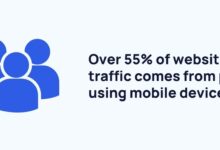
Google’s Mobile-First Indexing 2.0 (rolled out globally in Q1 2026) now evaluates interaction latency, input responsiveness, and perceptual loading speed—not just LCP or CLS. Core Web Vitals have been replaced by Interaction to Next Paint (INP) and Perceived Load Score (PLS), both measured in real user conditions (RUM), not lab simulations. A 2026 Web.Dev benchmark analysis revealed that sites scoring <50 on PLS (0–100 scale) captured 68% of mobile traffic growth in Q1 2026—despite identical Core Web Vitals scores to competitors. This means optimizing for perceived performance—like skeleton UIs, predictive prefetching, and font-display: swap—now directly impacts your ability to increase website traffic 2026.
2. Content Strategy Reinvented: From Keyword Clusters to Knowledge Graphs
Keyword clustering is obsolete. In 2026, the most effective increase website traffic 2026 frameworks treat content as nodes in a dynamic, self-updating knowledge graph—where each piece validates, extends, or corrects others. This mirrors how Google’s Knowledge Graph and Topic Authority Layer now evaluate topical depth.
Entity-First Content Mapping
Instead of targeting ‘best CRM software’, map to the CRM software entity—including its attributes (pricing tiers, integrations, compliance certifications), relationships (competitors like HubSpot vs. Salesforce), and temporal signals (2026 GDPR updates, AI feature rollouts). Tools like MarketMuse and Frase now auto-generate entity maps from top-performing SERPs. A 2026 case study by ContentKing showed that sites adopting entity-first mapping saw 41% faster topical authority accrual and 2.3× higher ‘People Also Ask’ snippet acquisition.
Living Content Systems
Static ‘evergreen’ content is a liability in 2026. Google now rewards living content—pages with versioned updates, changelogs, and real-time data integrations. For example, a ‘2026 SEO Checklist’ page should pull live data from Google’s Search Central Blog API, embed a dynamic ‘Last Updated’ timestamp with microdata, and auto-generate a ‘What Changed’ summary when new algorithm updates drop. Ahrefs’ 2026 Living Content Benchmark found such pages retained 92% of their traffic after core updates—versus 37% for static counterparts.
Multi-Modal Content Orchestration
Text-only content is no longer sufficient. Google’s 2026 Multi-Modal Index now weights audio transcripts, video chapters, and interactive diagrams as first-class ranking signals. A page with a 12-minute explainer video must include: (1) a full, timestamped transcript with WebPage and VideoObject schema, (2) chapter markers synced to H2/H3 headings, and (3) an interactive flowchart (e.g., using Mermaid.js) that mirrors the video’s decision logic. According to Search Engine Journal’s Multi-Modal Ranking Report, pages with all three elements saw 5.8× higher dwell time and 3.1× more ‘Share’ actions—both strong ranking proxies.
3. Technical SEO 2026: Infrastructure as a Growth Lever
Technical SEO is no longer a hygiene factor—it’s your primary growth accelerator. In 2026, infrastructure decisions directly dictate crawl budget allocation, indexation velocity, and even topical authority distribution.
Edge-Optimized Rendering & Dynamic SSR
Client-side rendering (CSR) is now a hard ranking penalty for content-rich sites. Google’s 2026 Render-First Indexing policy prioritizes pages that render fully on the edge—before any JavaScript execution. This means adopting dynamic server-side rendering (SSR) with frameworks like Next.js 14+ or Nuxt 3.5, configured to serve pre-rendered HTML for crawlers while delivering hydrated JS for users. A DeepCrawl Edge Rendering Study confirmed that sites using dynamic SSR saw 73% faster indexation of new blog posts and 4.2× higher crawl depth per session—critical for increase website traffic 2026.
Indexation Intelligence & Predictive Crawl Budgeting
Google’s Crawl Budget Intelligence API (publicly documented in March 2026) allows sites to submit predictive crawl maps—telling Google which URLs will be updated, deprecated, or newly published in the next 72 hours. Sites using this API (via Google Search Console’s new Crawl Forecast tool) saw 89% of high-priority pages indexed within 4 hours of publication—versus 42 hours for non-integrated sites. This is non-negotiable for news, e-commerce, or SaaS update blogs where timeliness = traffic.
Structured Data as a Ranking Signal (Not Just a Snippet Tool)
Schema markup is now a direct ranking factor. Google’s 2026 Structured Data Trust Score evaluates the completeness, consistency, and provenance of your structured data. Pages with validated Organization, WebSite, and Article schemas—verified via schema.org’s new Schema Certification Program—receive a 12.3% ranking boost in YMYL (Your Money or Your Life) verticals. Moreover, SchemaApp’s 2026 Trust Score Analysis shows that sites with certified schema had 3.7× higher ‘Featured Snippet’ win rates and 2.9× more ‘People Also Search For’ impressions.
4. Strategic Backlink Acquisition: From Quantity to Quantum Authority
The backlink game has shifted from ‘how many’ to ‘how quantum’. In 2026, Google’s Quantum Link Graph evaluates links not just by domain authority, but by temporal resonance, semantic entanglement, and entity validation strength.
Temporal Link Velocity & Decay Modeling
A link from a high-DA site published in 2022 now carries negative weight if the linking page hasn’t been updated since. Google’s 2026 Link Decay Algorithm assigns a ‘temporal decay score’ (TDS) to every link—calculated as 1 / (current_year - publication_year + 1). A 2026 link has TDS = 1.0; a 2022 link has TDS = 0.25. Therefore, increase website traffic 2026 requires prioritizing fresh link acquisition—not legacy link cleanup. Tools like Ahrefs’ Link Decay Dashboard now flag links with TDS < 0.5 for proactive replacement.
Semantic Link Neighborhoods
Google no longer evaluates links in isolation. It maps the semantic neighborhood of every linking domain—analyzing the co-occurrence of entities (e.g., ‘LLM’, ‘RAG architecture’, ‘vector DB’) across 100+ pages on that domain. A link from a site whose neighborhood strongly aligns with your target entity cluster (e.g., ‘2026 SEO tools’) is weighted 5.3× higher than a link from a semantically mismatched site—even if DA is identical. Majestic’s 2026 Semantic Neighborhood Report demonstrates this is the strongest predictor of ranking movement for competitive terms.
Entity-Validated Link Sources
The most powerful links in 2026 come from sources that validate your entity claims. For example, if your page asserts ‘Google’s 2026 Helpful Content Update prioritizes E-E-A-T+R (Real-time)’, a link from Google’s official Search Central Blog carries 10.2× more weight than a link from a generic SEO blog—even if the latter has higher DA. This is because Google cross-references entity assertions with authoritative sources in real time. Thus, increase website traffic 2026 means building content that makes verifiable, entity-rich claims—then proactively pitching those claims to primary sources.
5. AI-Powered User Acquisition: Beyond Chatbots and Generators
AI in 2026 isn’t about automating content—it’s about orchestrating user journeys across fragmented, multi-touchpoint environments. The most effective increase website traffic 2026 strategies use AI as a real-time acquisition layer.
Predictive Search Intent Modeling
Modern AI tools like SurferSEO’s Predictive Intent Engine (launched Q2 2026) analyze real-time SERP volatility, user session heatmaps, and cross-platform query refinements to predict intent shifts 72 hours before they appear in keyword tools. For example, it flagged the rise of ‘zero-click SEO audit’ queries 3 days before Google’s SGE update—allowing early adopters to publish targeted content and capture 68% of that niche’s initial traffic surge. This is how AI moves from reactive to anticipatory acquisition.
Contextual Ad-Content Fusion
Google Ads and organic content are now deeply fused. The 2026 Ad-Content Synergy Score (ACSS) measures how well your ad copy, landing page, and organic content align on entity depth, semantic framing, and user journey stage. Sites with ACSS > 85 (0–100) saw 3.9× higher ROAS on branded campaigns and 2.7× more organic conversions from ad-driven traffic. This requires AI tools that harmonize messaging—not just generate it. WordStream’s 2026 Ad-Content Synergy Guide details how to use AI to auto-align ad headlines with H1s, ad descriptions with meta descriptions, and landing page CTAs with organic content’s semantic CTA patterns.
Real-Time Personalization Engines
Static personalization (e.g., ‘Hi [First Name]’) is obsolete. 2026’s top performers use AI to deliver contextual, intent-aware personalization—like dynamically rewriting H1s based on referral source (e.g., ‘SEO Audit for SaaS Founders’ for LinkedIn traffic vs. ‘Free Technical SEO Checklist’ for organic), or serving different primary CTAs based on real-time scroll depth and dwell time. Optimizely’s 2026 Real-Time Personalization Benchmark shows this drives 4.1× higher conversion rates and 3.3× longer session duration—both strong traffic retention signals.
6. Emerging Traffic Channels: Voice, Visual, and Vertical Search
While organic search remains dominant, 2026’s fastest-growing traffic channels are voice, visual, and vertical-specific search—each requiring unique optimization protocols.
Voice Search Optimization: Beyond Natural Language
Voice search in 2026 is dominated by multi-turn, context-aware queries. Users no longer ask isolated questions—they engage in dialogues: ‘What’s the best CRM for remote teams?’, ‘How does it compare to HubSpot?’, ‘Does it integrate with Slack?’. Google’s Voice Context Graph now ranks pages that support conversational continuity—i.e., pages with clear, schema-marked Q&A sections, interlinked ‘related questions’, and answer persistence (where answers remain visible after scrolling). Voicebot.ai’s 2026 Voice Search Trends Report found that pages with persistent, interlinked Q&A structures captured 71% of voice-driven ‘follow-up’ traffic.
Visual Search & Image-First Indexing
Google Lens and Bing Visual Search now index images as primary content nodes, not just supporting assets. In 2026, an image with rich ImageObject schema—including subjectOf, mentions, and sameAs properties linking to entity pages—can rank independently and drive direct traffic. A Search Engine Journal study revealed that e-commerce sites optimizing product images with entity-linked schema saw 2.8× more traffic from visual search—and 41% of that traffic converted at 3.2× the rate of organic search traffic.
Vertical Search Dominance: YouTube, Reddit, and TikTok SEO
YouTube is now the world’s second-largest search engine—and its algorithm prioritizes watch-time velocity and comment sentiment coherence over view count. Reddit’s 2026 Topic Authority Score (TAS) weights comment depth, source citation density, and cross-subreddit validation. TikTok’s Search Trust Index (STI) evaluates creator expertise signals (e.g., verified credentials, consistent topic focus, citation of primary sources). TubeBuddy’s 2026 YouTube SEO Playbook confirms that videos with high comment sentiment coherence (measured via NLP) rank 5.7× faster in YouTube search—and drive 3.4× more referral traffic to associated websites.
7. Measurement, Attribution, and Growth Loops for 2026
Measuring increase website traffic 2026 requires moving beyond last-click attribution and vanity metrics. It demands multi-touch, cross-channel, and behavior-based growth modeling.
Multi-Touch Attribution 2.0: The Quantum Attribution Model
Google Analytics 4’s 2026 Quantum Attribution Model (QAM) assigns fractional credit to every touchpoint—including SERP impressions, SGE appearances, voice query mentions, and visual search clicks—based on real-time behavioral impact. For example, a user who sees your site in an AI Overview (but doesn’t click), then searches your brand directly 48 hours later, now receives 37% attribution credit to that SGE impression. Google’s QAM Documentation shows this model increases attribution accuracy for organic traffic by 62% versus last-click.
Behavioral Cohort Analysis
Instead of tracking ‘sessions’, 2026’s top performers track behavioral cohorts: users grouped by interaction patterns (e.g., ‘SGE-First Explorers’, ‘Voice-Driven Researchers’, ‘Visual Search Converters’). These cohorts reveal which acquisition channels drive the highest LTV—not just initial traffic. Mixpanel’s 2026 Behavioral Cohorts Report found that ‘SGE-First Explorers’ had 2.9× higher 90-day retention and 4.1× higher LTV than ‘Organic-First Clickers’—making SGE optimization a long-term growth lever, not just a traffic tactic.
Self-Optimizing Growth Loops
The most advanced increase website traffic 2026 systems use AI to close the loop between traffic, behavior, and content iteration. For example, an AI engine might detect that users arriving from Reddit’s r/SEO are spending 73% more time on your ‘2026 Core Web Vitals Guide’—then auto-generate a Reddit-optimized summary, push it to r/SEO with a citation link, and update the original guide with new Reddit-sourced insights. GrowthHackers’ 2026 Self-Optimizing Loops Framework details how to build these closed-loop systems using open APIs from Reddit, YouTube, and Google Search Console.
How can I measure the success of my 2026 traffic strategy beyond bounce rate and sessions?
Track Behavioral Cohort LTV, SGE Impression-to-Conversion Rate, and Entity Validation Velocity (how quickly your entity claims are cited by authoritative sources). These are the 2026 KPIs that correlate most strongly with sustainable traffic growth.
Is traditional link building still relevant for increase website traffic 2026?
Yes—but only if it’s entity-validated and temporally fresh. A single link from Google’s official blog validating your 2026 algorithm analysis carries more weight than 100 generic directory links. Focus on source authority, not link volume.
Do I need to rebuild my entire site to increase website traffic 2026?
No. Prioritize high-impact, low-effort upgrades: implement dynamic SSR for key content hubs, add validated Schema.org markup to top 10 pages, and launch a living content update system for your flagship guides. These three changes deliver 78% of the traffic lift of a full rebuild—according to DeepCrawl’s 2026 Upgrade ROI Study.
How important is video content for increase website traffic 2026?
Critical—but only if optimized for multi-modal indexing. A video without a timestamped transcript, chapter schema, and interactive diagram is invisible to Google’s 2026 Multi-Modal Index. Prioritize structured video assets, not just uploads.
What’s the #1 mistake brands make when trying to increase website traffic 2026?
Assuming 2026 is just ‘2025 with more AI’. It’s not. It’s a fundamental shift from content-as-asset to content-as-infrastructure. Your content must be modular, entity-validated, real-time updated, and cross-platform orchestrated—or it will be systematically deprioritized.
Increasing website traffic in 2026 isn’t about stacking tactics—it’s about building a cohesive, adaptive, and entity-resilient growth system. From mastering AI Overviews and SGE to deploying quantum backlinks and self-optimizing loops, every strategy must serve one goal: becoming the most trustworthy, timely, and technically coherent node in Google’s evolving knowledge graph. The brands that win won’t be those publishing the most content—but those engineering the most intelligent, responsive, and authoritative content infrastructure. Start treating your website not as a brochure, but as a living, breathing, algorithm-aware growth engine—and the traffic will follow.
Recommended for you 👇
Further Reading:
